I've updated my post on Basic Keychain Terminology to include "infinity ring" type keychain findings. You'll have to click the link above back to the original post to find out what those are. But for anyone who may be wondering, infinity ring keychains have nothing to do with the Marvel movie franchise.
Signed, Treesa
Showing posts with label keychain terminology. Show all posts
Showing posts with label keychain terminology. Show all posts
Wednesday, May 9, 2018

Thursday, November 9, 2017
Anatomy Of A Keychain
It has come to my attention that my usage of the word "keychain" is somewhat flawed. The term keychain technically refers to only one of several parts that make up what I think of as a keychain. In this post, I will be listing each part by name along with a brief description. There are three separate parts on this list, although some keychains can get by with utilizing only two of them.

Part 1: The Keyring
The term "keyring" specifically refers to a split ring, which I referenced in a previous post on Keychain Terminology as being one of the most common types of keychain "findings". As I explained in that post, not every keychain uses a split ring finding. But in my online research, I found the term 'keyring' being used in a generalized way to refer to the part of the keychain that holds the keys.
Part 2: The Keychain
In this context, the "keychain" is an actual chain that connects the part that holds the keys to a decorative element. In some cases, the chain used is a "snake chain", which I mentioned in my Keychain Terminology post, rather than a standard chain. However, I have seen a lot of keychains in my time that don't actually have a chain part. In those examples, the part that holds the keys is directly connected to the decorative part using a jump ring finding. This brings me to the third and final keychain part.
Part 3: The Key Fob
The key fob is the decorative, ornamental part of a keychain. Whether it's printed with the name of a business or shaped like a cartoon character, it's generally the part that makes people want to collect keychains in the first place.
Despite me having discovered all of this information, I don't think you'll see me stop using the word "keychain" anytime soon. The fact of the matter is, I haven't been able to find a term I can substitute that refers to the whole keychain, rather than just a part of it. So I guess I'll just have to keep using the word keychain the way I always have. But now, if someone asks me what the difference is between a keychain and a key fob, I'll be able to tell them. And so will you.
Signed, Treesa

visual aid
(a Rawcliffe pewter keychain from the Medieval Times dinner theater chain)
The term "keyring" specifically refers to a split ring, which I referenced in a previous post on Keychain Terminology as being one of the most common types of keychain "findings". As I explained in that post, not every keychain uses a split ring finding. But in my online research, I found the term 'keyring' being used in a generalized way to refer to the part of the keychain that holds the keys.
Part 2: The Keychain
In this context, the "keychain" is an actual chain that connects the part that holds the keys to a decorative element. In some cases, the chain used is a "snake chain", which I mentioned in my Keychain Terminology post, rather than a standard chain. However, I have seen a lot of keychains in my time that don't actually have a chain part. In those examples, the part that holds the keys is directly connected to the decorative part using a jump ring finding. This brings me to the third and final keychain part.
Part 3: The Key Fob
The key fob is the decorative, ornamental part of a keychain. Whether it's printed with the name of a business or shaped like a cartoon character, it's generally the part that makes people want to collect keychains in the first place.
Despite me having discovered all of this information, I don't think you'll see me stop using the word "keychain" anytime soon. The fact of the matter is, I haven't been able to find a term I can substitute that refers to the whole keychain, rather than just a part of it. So I guess I'll just have to keep using the word keychain the way I always have. But now, if someone asks me what the difference is between a keychain and a key fob, I'll be able to tell them. And so will you.
Signed, Treesa
Monday, November 6, 2017
There's A Word For It
Let's face it, some collectables have more status attached to them than others. In the more respected collecting fields, collectors will often have a fancy designation they can use to refer to themselves, to show that they are serious collectors. Coin collectors are numismatists. Stamp collectors are philatelists. Teddy bear collectors are arctophilists. But did you know that there's a fancy term for someone who collects key rings? That term is copoclephilist.
According to my online research, the word copoclephislist originates from the combination of three Greek words: kope, kleis, and phile. Kope means handle, kleis is key, and phile translates as "one that is attracted to".
Just don't ask me how to pronounce it.
Signed, Treesa
According to my online research, the word copoclephislist originates from the combination of three Greek words: kope, kleis, and phile. Kope means handle, kleis is key, and phile translates as "one that is attracted to".
Just don't ask me how to pronounce it.
Signed, Treesa
Saturday, November 4, 2017
Split Rings, Ball Chains, And Snake Chains (Basic Keychain Terminology)
This post is intended to give a brief summary of the various types of hardware used to make keychains. In jewelry maker's lingo, any metal component that is used in making jewelry is called a "finding". Despite what non-collectors might think about all keychains being the same, there are actually a variety of findings that can be used to make keychains. The most common of these findings seems to be the "split ring" or "keyring".
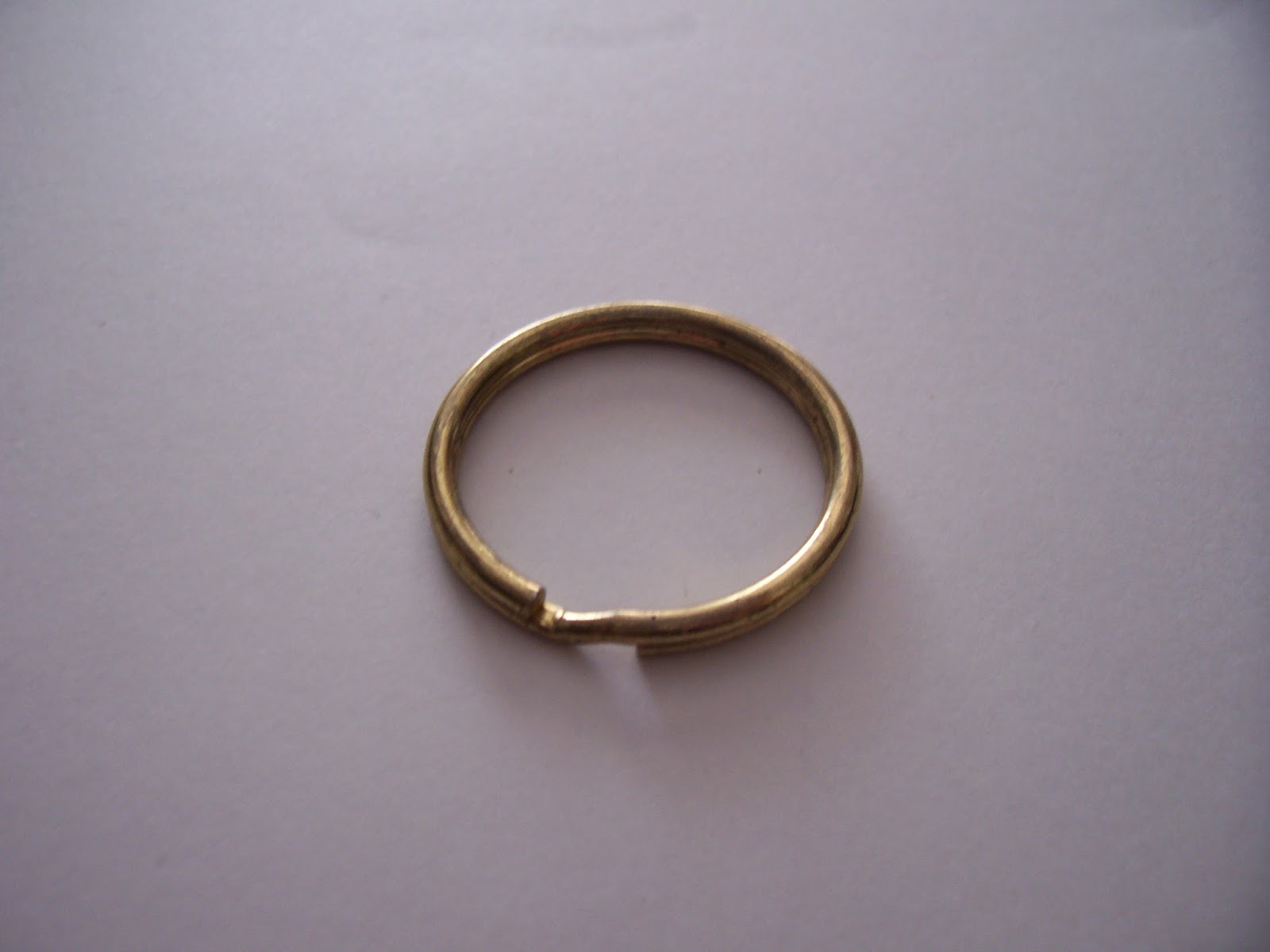
A split ring is shaped like a circular coil with two ends. To attach a key to a split ring, one end of the coil is fed through the hole in the top of the key. Then the key is slid along the length of the ring until it passes under the other end.

This isn't as complicated as it sounds, but it can be a little tricky if your fingernails aren't long enough to separate the coils of the ring.
The second most common finding, at least for older keychains, would probably be the "ball chain" or "bead chain".

As the name suggests, a ball chain/bead chain looks like a chain made up of tiny metal balls or beads. The last ball in the chain slides into a clamp of sorts at the other end.

To attach a key, simply unclip the last 'bead' of the bead chain, then slide the chain through the hole in the top of the key and snap the end 'bead' back into the clamp.
An "infinity ring" keychain is similar to a split ring, except that instead of being shaped like a circle, the loop part of an infinity ring is shaped more like a figure 8.

The example shown above commemorates a Revolutionary War re-enactment event in Bordentown, New Jersey. Turned sideways, the figure 8 shape becomes the symbol for infinity, which explains the name "infinity ring".
The "snake chain" keychain was named not for the clasp that the keys attach to, which is called a "snap end", but for the snake like chain that attaches the snap end to the decorative part of the keychain.

I've also seen snap end keychains that use a standard chain, instead of a snake chain. An example would be this vintage 'tiki' keychain from United Airlines.

The next type of keychain used to be called a "c-ring", but this term seems to have fallen out of favor, since nowadays the word 'c-ring' refers to something completely different.

Incidentally, the bird keychain pictured above is branded on the back with the 'designer' fashion brand Chico's.

The "snake chain" keychain was named not for the clasp that the keys attach to, which is called a "snap end", but for the snake like chain that attaches the snap end to the decorative part of the keychain.

I've also seen snap end keychains that use a standard chain, instead of a snake chain. An example would be this vintage 'tiki' keychain from United Airlines.

The next type of keychain used to be called a "c-ring", but this term seems to have fallen out of favor, since nowadays the word 'c-ring' refers to something completely different.

Incidentally, the bird keychain pictured above is branded on the back with the 'designer' fashion brand Chico's.
This keychain finding was likely referred to as a c-ring because it's shaped like a letter C, with a ball or some other type of decorative element shape on each end. On the Philadelphia Phillies baseball team keychain that is pictured below, one end is shaped like a baseball while the other end is shaped like a baseball glove. I believe the pink ribbon charm is for breast cancer awareness.

A key is attached by unscrewing one of the ends, sliding the key onto the 'C' shaped part of the keychain, and then screwing the end back on.

A "screw lock" keychain sort of combines the functionality of a c-ring with a more traditional keychain shape.

Screw lock keychains feature a rectangular or an oblong shaped loop at the top. A segment of this loop is unscrewed so that the keys can be attached. The screw lock keychains pictured above are souvenir items from Glenhardie Country Club in Wayne, Pennsylvania and the city of Schweinfurt in Germany, respectively.
Keychains can also be made with a clip type finding. There are a few variations of these, some of which might not technically qualify as keychains. But I'll be discussing that in more detail in my next post. For now, here is a photo of a few different clip type findings.

The first clip in the row is called a "lobster clasp", due to the fact that it resembles a lobster's claw. As you can see above, some clips are made from plastic rather than metal.
"Carabiners" were also popular as keychains for a time.

Originally used by rock climbers, carabiners became trendy with the general public, who used them for keychains and backpack clips. Basic Fun Inc. even released carabiner versions of some of their popular board game keychains at one time.
I've done my best to verify the names of the different keychain types, both online and at my local craft stores. If anyone reading this post notices any corrections that should be made, please leave a comment. If nothing else, I think I've proven my point about keychains not all being the same.
Signed, Treesa

A key is attached by unscrewing one of the ends, sliding the key onto the 'C' shaped part of the keychain, and then screwing the end back on.

A "screw lock" keychain sort of combines the functionality of a c-ring with a more traditional keychain shape.

Screw lock keychains feature a rectangular or an oblong shaped loop at the top. A segment of this loop is unscrewed so that the keys can be attached. The screw lock keychains pictured above are souvenir items from Glenhardie Country Club in Wayne, Pennsylvania and the city of Schweinfurt in Germany, respectively.
Keychains can also be made with a clip type finding. There are a few variations of these, some of which might not technically qualify as keychains. But I'll be discussing that in more detail in my next post. For now, here is a photo of a few different clip type findings.

The first clip in the row is called a "lobster clasp", due to the fact that it resembles a lobster's claw. As you can see above, some clips are made from plastic rather than metal.
"Carabiners" were also popular as keychains for a time.

Originally used by rock climbers, carabiners became trendy with the general public, who used them for keychains and backpack clips. Basic Fun Inc. even released carabiner versions of some of their popular board game keychains at one time.
I've done my best to verify the names of the different keychain types, both online and at my local craft stores. If anyone reading this post notices any corrections that should be made, please leave a comment. If nothing else, I think I've proven my point about keychains not all being the same.
Signed, Treesa
Subscribe to:
Posts (Atom)